
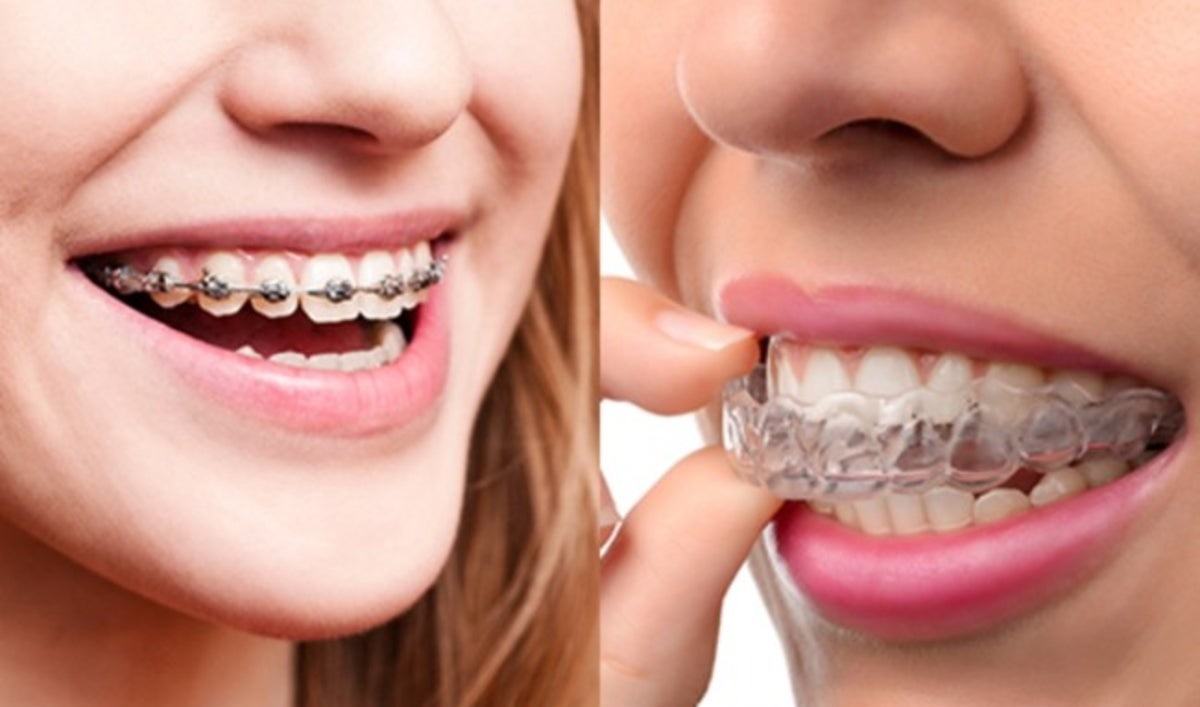
Traditional braces and clear aligners correct crooked, crowded, or misaligned teeth, as well as bite issues such as overbite, underbite, crossbite, or overjet. Both methods move teeth through incremental adjustments planned by an orthodontic specialist. Although both systems work toward similar alignment goals, they rely on different materials and processes. Clear aligners are removable, while braces remain fixed throughout treatment. Here is more information about aligners and traditional braces, and the differences between them:
Clear Aligners
Clear aligners are a series of custom trays that apply controlled pressure to specific teeth based on a digital treatment plan. Treatment usually begins with an in-office scan, which captures detailed images of the teeth and may take about 10–15 minutes. After scanning, the trays are produced off-site; this step can take several weeks, depending on manufacturing timelines. Each aligner is worn for 1 to 3 weeks, and the trays must remain in place for at least 22 hours per day to maintain progress.
Aligners address several conditions, including crooked teeth, crowded teeth, and bite discrepancies such as overbite, underbite, crossbite, and overjet. Tooth-colored attachments may attach to specific teeth to help guide movement. Because aligners are removable, wearers can take them out before meals.
Traditional Braces
Traditional braces use bonded brackets, a wire, and elastic ties or clips to guide tooth movement. During the first appointment, the provider positions brackets on each tooth and threads a wire through them, which creates the framework for adjustments at future visits. Placement is typically the longest appointment in a braces treatment sequence. It occurs entirely in the office because all components are applied directly to the teeth. Later appointments involve wire changes or adjustments that help the provider control tooth movement over time.
Braces differ from aligners because they remain fixed in place, meaning brushing and flossing may require additional steps to clean around the brackets and wires. Traditional braces may also require dietary changes.
Daily Experience Comparison
Daily routines vary significantly between clear aligners and braces. Aligners allow normal eating because the trays are removed before meals. Before putting them back in, the wearer must thoroughly clean their teeth. Braces do not come out, so users adapt by avoiding foods that could loosen brackets or damage the wire. Both systems move teeth gradually, although aligner users may notice slight tightness when starting each new tray. The orthodonist designs each tray to create small, incremental changes.
Appointment frequency can be similar for both options. Braces require periodic wire adjustments, while aligner wearers attend short visits every few weeks to receive new trays. Aligners may feel more flexible in daily life because the wearer can remove them for brief periods. This flexibility requires consistent wear to maintain treatment progress. Braces provide continuous force without daily management, though they require extra care during brushing and flossing.
Learn More About Braces and Aligners
Choosing between clear aligners and braces depends on treatment goals, lifestyle preferences, and the types of alignment issues being addressed. An orthodontic evaluation determines whether removable trays or bonded brackets will best support the desired result. For more information about traditional braces and aligners, consult your orthondist.
